
Pope Francis, Bishop of Gloucester to wash feet of young refugees, women prisoners on Holy Thursday
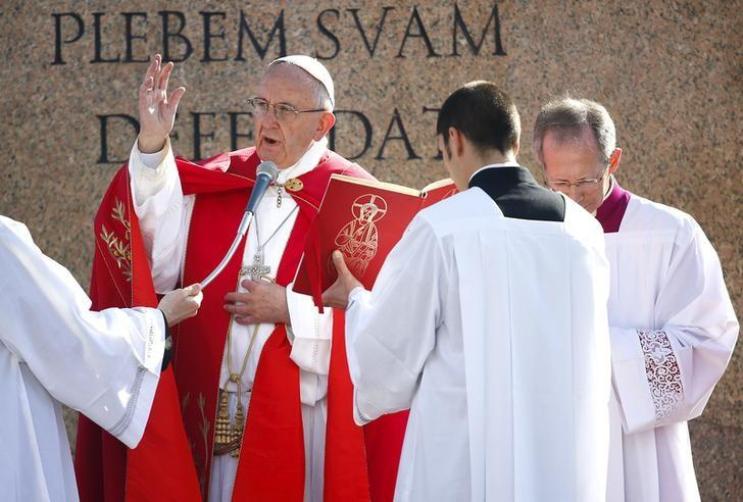
On Holy Thursday, March 24, Pope Francis will be washing the feet of young refugees, in the way that Jesus washed the feet of his disciples.
"We can understand the symbolic value intended by Pope Francis' visit to the CARA in Castelnuovo di Porto and his bending down to wash the feet of refugees," Archbishop Rino Fisichella, President of the Pontifical Council for the Promotion of the New Evangelisation, wrote in an article in Vatican publication L'Osservatore Romano, as quoted by Radio Vaticana.
CARA stands for Centro di Accoglienza per Richiedenti Asilo or Centre for Asylum Seekers, located north of Rome, and many of the kids are not Catholic. It is where the pontiff will celebrate the Mass of the Lord's Supper.
"We are urged to look forward to Easter with the eyes of those who make of their faith a life lived in service to those whose faces bear signs of suffering and violence," he said. "By washing the feet of refugees, Pope Francis implores respect for each one of them."
Meanwhile, Right Reverend Rachel Treweek, the Bishop of Gloucester, will also be washing feet, but it will be those of women at the Eastwood Park Women's Prison in Falfield, Gloucestershire. On Good Friday, she will lead reflections.
The bishop will be spending three days in the facility up to Easter Sunday, learning about life behind bars by accompanying the prison chaplain as well as leading services and attending focus groups.
"In Holy Week, Christians recall Jesus Christ's death, the brokenness of the world and our part in it; and yet we celebrate God's immense love and new life revealed in Christ's resurrection," Treweek said, as quoted by Christian Today.
She said that spending Holy Week with the women at the prison is very poignant, "in which the focus is one of hope and new possibility."
According to Institute for Criminal Policy Research, at least 700,000 females are locked up in penal institutions around the world. The U.S. has more than 200,000 and China has more than 103,000 excluding those in pre-trial detention, while the U.K. (England and Wales) has about 4,000.


